
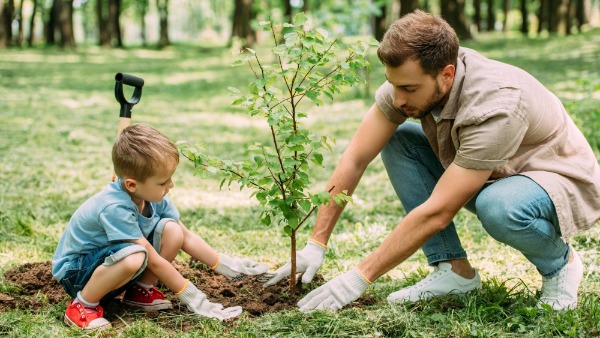
Spring is here and it is time to think about our gardens and yards: maybe a redesign so there will be less mowing? More pollinator plants? Provide food? Less poison ivy? If you have the room, what about planting a native tree? If you already have fruit trees, what about starting your own food forest?
What can you do? Learn more about your options from Sudbury Valley Trustees and guidance from Concord Massachusetts. If you want help designing, installing, or maintaining your garden for maximum health and biodiversity, check out ideas in the Steps to Take tab.
Don’t have your own space but you love these ideas? Organize to bring biodiversity to your synagogues!
Invasive Plant Management. One of the most pressing issues our landscapes and ecosystems face is the ever expanding growth of invasive plants. Invasive plants form mono cultures in our ecosystems and threaten the diversity of our native plant life. This has a detrimental impact on the biodiversity our landscapes can support.
Suburban Pollinator Meadows. Design, install, and care for beautiful pollinator gardens that fit the size and scale of your lawn. Add beauty to the landscape while supporting birds, bees, butterflies and beneficial invertebrates.
Native Plant Gardens. Designing with Native Plants deepens a landscape’s ecological function. Providing a host of benefits to wildlife and natural environment, Native Plants play an important role in improving our communities and Nature’s relationship to one another.
Edible Forest Gardens. Our gardens can provide delicious food for its stewards. Edible Forests Gardens offer perennial systems of food within the different layers of natural ecosystems.
Rain Gardens. Rain gardens are an important part in our landscapes as they help store and clean nature’s most precious resource.
Lawn Alternatives. Sick of mowing? Not using the lawn for play or gathering? There are plenty of plant alternatives that can replace the lawn and provide less maintenance and deeper ecological benefits for humans and wildlife.
No Mow Lawn. Lower maintenance and more ecological lawn grasses are now on the market. Flexible in its aesthetic and maintenance requirements, this is a great step in developing a more ecological landscape.
Fall Cleanup. Consider an alternative to your standard fall clean up. You can recycle leaves back into the landscape as a fine mulch. This removes their smothering characteristics and allows them to fertilize your existing lawn and gardens. By mulching leaves we speed up nature’s process of cycling nutrients to help sustain the health of your garden’s plants and the microbiology of the soil. Close the loop and recycle “waste” back into nourishment on the spot, right there on your lawn!